On-Farm Natural Capital and Market Readiness Project
This project aims to support farmers in northern Tasmanian to identify their natural assets, implement practical actions to improve its condition, and enhance their skills to monitor, measure and report on its improved condition. Building on previous initiatives, the project will assist farmers in northern Tasmania to access emerging carbon and biodiversity markets and adopt sustainability frameworks.
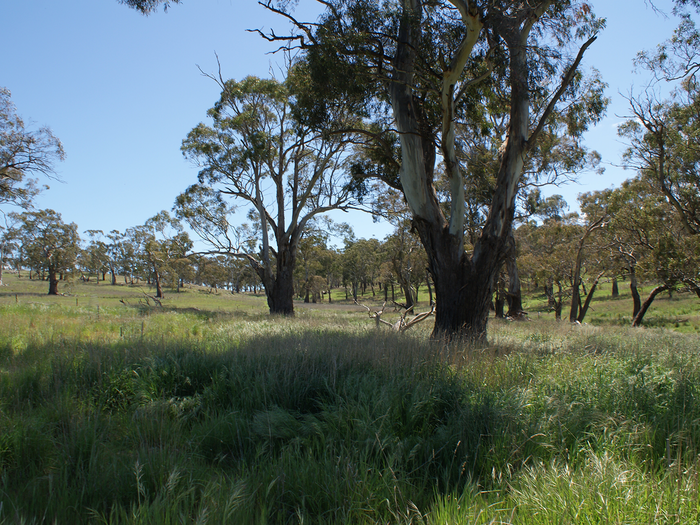
Native vegetation can benefit from sustainable grazing practices.
Background
Background
Farmland in northern Tasmania represents approximately 46 per cent of Tasmania’s total farmland and generates approximately $800M annually to the Tasmanian economy, whilst conservation areas and natural environments account for approximately 35 per cent of the region.
Farming systems operate on, or adjacent to many highly valued natural environments in the region, home to over 500 listed plant and animal species, including:
- Four globally significant sites
- Five Ramsar listed wetlands
- 900,000 ha of native forests
Farming businesses depend on northern Tasmania’s natural resources. This project contributes to the aim of the Australian Government’s Climate-Smart Agriculture Program, to support farmers to drive agricultural growth, while adopting sustainable natural resource management practices that protect and conserve natural capital and biodiversity.
Project plan
Project plan
By June 2026:
- At least 30 farmers in northern Tasmania will have identified the natural capital and biodiversity assets on their farms, and prioritised NRM practices that will improve their value.
- At least 5 demonstration sites will be established on at least 30 Ha, showcasing NRM practices that protect and conserve natural capital and biodiversity assets.
- Farmers will better understand tools, technologies and practices to engage in emerging carbon and biodiversity markets, and sustainability frameworks.
By June 2028:
- Farmers engaged in the project have adopted priority NRM practices to protect and conserve at least 362 hectares of natural capital and biodiversity assets.
- At least 100 landholders in the northern Tasmania region have increased awareness and confidence in adopting practical NRM practices.
- Farmers engaged in the project have improved their capability through accessing carbon and biodiversity incentives, and implemented industry sustainability frameworks.
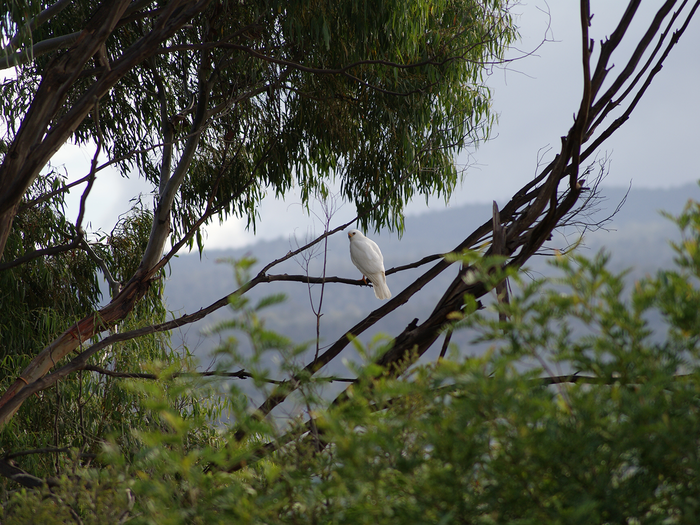
The project recognises endangered species like grey goshawk as biodiversity capital.
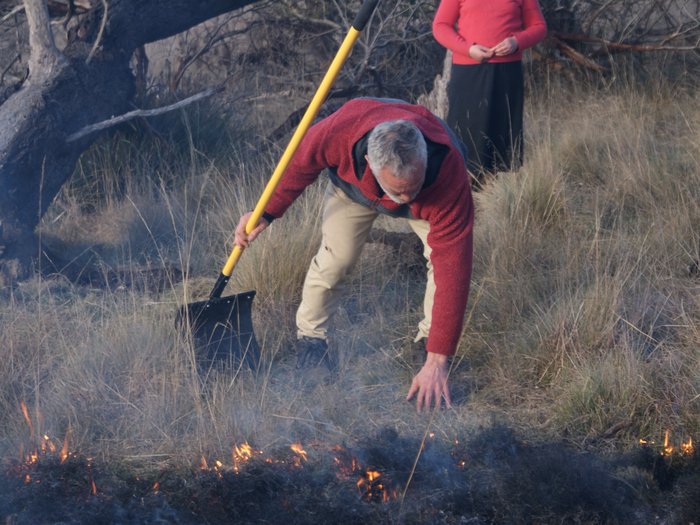
Appropriate fire regimes can contribute to improved soil health.
A collaborative approach
A collaborative approach
This project will establish five farmer-led demonstration sites, on at least 30 Ha, to showcase best practices in sustainable land management. These sites will serve as hubs for knowledge exchange, field days and training workshops, and demonstration sites for practical techniques for improving soil health, enhancing biodiversity and accessing sustainability markets.
Working with NRM North’s Sustainable Agriculture Facilitators (SAF), participating landholders will be supported to identify and document on-farm natural assets, and to prioritise actions that will protect and enhance their on-farm natural capital. Additionally, farmers will be supported to make informed decisions about accessing emerging environmental markets and adopting sustainability frameworks.
Projects in-progress
Projects in-progress
A farmer-led demonstration site has been established at 'Milford', Conara, to showcase how pasture diversity can improve soil health, productivity, and farm resilience.
Working with technical advisors, the project includes the development of a pasture renovation plan, biological seed treatment, and ongoing use of pasture monitoring technology through Downforce technologies software subscription.
A demonstration site has been established at Springfield near Scottsdale to evaluate the use of Food Organics and Garden Organics (FOGO) compost in established ryegrass pastures used for beef production.
The project is investigating how composted organic materials can improve soil nutrient status, increase soil organic carbon, and support pasture productivity. By demonstrating the practical application of recycled organic nutrients, the trial will help farmers better understand opportunities to improve soil health, reduce reliance on synthetic fertilisers, lower input costs, and support more sustainable farming systems.
A strategic weed management project is underway at 'Dunedin', St Leonards, targeting approximately 40 hectares of gorse and blackberry infestations.
The project is demonstrating an integrated approach to weed management that combines mechanical removal, drone-based spraying, targeted spot spraying, and follow-up management to reduce chemical use while improving effectiveness. The approach has been designed to protect native vegetation, improve agricultural productivity, and support the long-term condition of natural assets across the property.
A large-scale weed management project is underway on a property near Longford, targeting an 80-hectare section of a broader 250-hectare management area impacted by gorse infestation.
The project combines mechanical weed removal, aerial and ground-based spraying, strategic fencing, and pasture renovation to restore productive land and improve long-term management outcomes. Deep-rooted, drought-tolerant pasture species will be established following weed control activities, supporting improved pasture productivity, land condition, and resilience while reducing the impact of invasive weeds across the landscape.
A nutrient management planning case study is underway at 'Dunedin', St Leonards, to showcase the benefits of whole farm nutrient planning.
Working with an approved nutrient management consultant, the project is using soil testing, nutrient mapping, nutrient budgeting, and production system analysis to improve nutrient-use efficiency and support informed fertiliser decisions. The demonstration aims to reduce the risk of nutrient runoff and leaching, improve farm productivity, and provide a practical example of how nutrient management planning can support both agricultural and environmental outcomes.
NRM North has partnered with the Melaythenner Teeackana Warrana Aboriginal Corporation (MTWAC) and the Tebrakunna Rangers to support a fire management and natural area restoration trial at Tebrakunna/Cape Portland.
The project is demonstrating the use of fire as a tool for ecological restoration while supporting Aboriginal-led land management and the application of cultural burning knowledge. Activities include baseline soil and vegetation monitoring, temporary exclusion fencing, post-burn revegetation, and ongoing ecological assessment. Through this partnership, the project aims to improve native vegetation condition, manage weeds and unwanted pasture species, and strengthen understanding of how cultural land management practices can contribute to long-term landscape health and resilience.
Resources
Resources
Partners
This project is supported by the Australian Government through funding from the Natural Heritage Trust under the Climate-Smart Agriculture Program and delivered by NRM North, a member of the Commonwealth Regional Delivery Partners panel.
Partners
This project is supported by the Australian Government through funding from the Natural Heritage Trust under the Climate-Smart Agriculture Program and delivered by NRM North, a member of the Commonwealth Regional Delivery Partners panel.