Improving Midlands Biodiversity: stewardship and restoration
This project is jointly funded by the Australian Government, delivering outcomes for the Natural Heritage Trust project ‘Building resilience and enhancing ecological values of the Midlands Biodiversity hotspot’ and the Saving Native Species Program ‘Improving the condition of the Midlands Tasmania priority place - Saving Native Species funding in the North NRM region Tasmania’.
The project aims to restore and enhance the biodiversity of the Midlands region by addressing key threats, promoting sustainable land management, and engaging the community in conservation efforts.


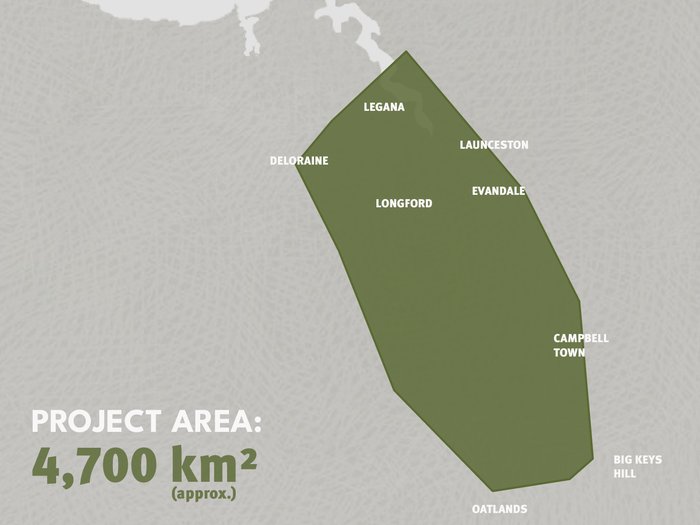
Map of central Tasmania showing approximate project target area.
Background
Background
The Midlands region of central Tasmania has been identified as one of 20 Priority Places in the Australian Government’s Threatened Species Action Plan 2022-2032, due to its high biodiversity values and conservation significance.
It is home to threatened ecological communities and species including:
- Lowland Native Grasslands of Tasmania
- Tasmanian Forests and Woodlands dominated by black gum or Brookers gum (Eucalyptus ovata / E. brookeriana)
- Threatened grassland flora species including the critically endangered orchids Paraprasophyllum taphanyx, P. incorrectum, and P. olidum.
Colonised by Europeans in the early 1800s and heavily cleared of native vegetation to accommodate intensifying agricultural practices, it is believed that the Midlands region has lost more than 70 per cent of its pre-colonised vegetation. Prior to colonisation, the landscape was maintained and managed with fire by the Palawa people as open woodland and native grassland.
The conservation significance of the area is currently threatened by inappropriate fire regimes, habitat clearing, fragmentation and degradation, agricultural intensification, invasive weeds, and low population numbers for many threatened species of flora and fauna.
Project Plan
Project Plan
By June 2028:
- at least 200 ha of priority threatened ecological communities and threatened species habitat will be improved through fencing for livestock management, weed control, revegetation and ecological burning
- the risk of extinction for 9 EPBC listed threatened flora species, including several critically endangered orchids, will be reduced by controlling grazing and recreational access to priority populations, specialist seed collection and propagation, and translocations to new sites
- at least 17 ha of priority habitat will be surveyed for the presence of critically endangered native orchids including the Graveside Leek Orchid (Paraprasophyllum taphanyx). These surveys will involve the use of a detector dog and advise future conservation efforts
- at least 5,000 ha of high conservation value land in the Midlands region will have improved protection and management through new conservation agreements and tailored habitat management planning advice
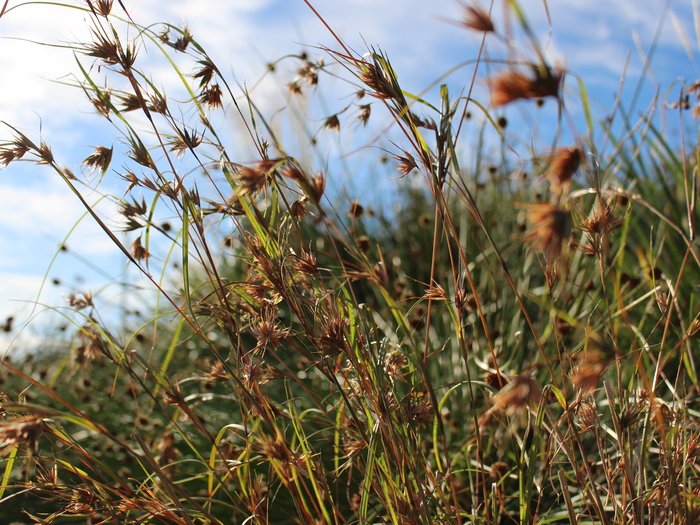
Themeda triandra (Kangaroo grass).
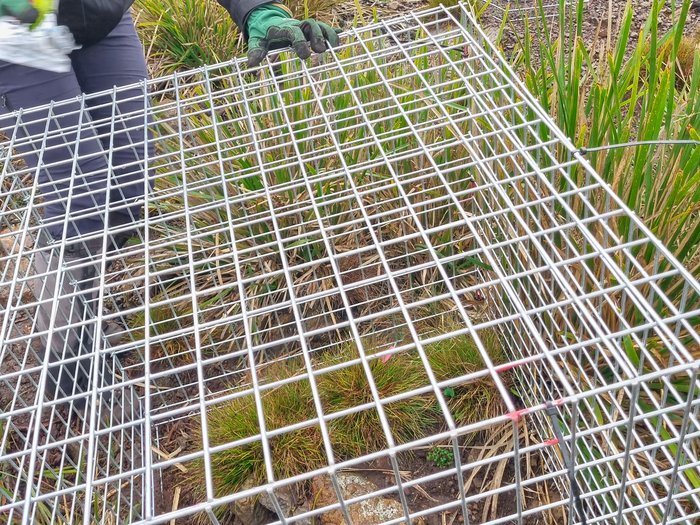
Critically endangered grassland flora will be protected from livestock and human interference.
A collaborative approach
A collaborative approach
To help secure the future of threatened species and ecological communities, NRM North is partnering with the Landscape Recovery Foundation, Tasmanian Land Conservancy (TLC), and Bush Heritage Australia to expand upon the work of the Midlands Conservation Partnership (MCP) and to engage new property owners in the region.
The Landscape Recovery Foundation coordinates the Tasmanian Orchid Conservation and Research Program (TOCRP), to improve the status of threatened orchids. Hosted at the Tasmanian Seed Conservation Centre in the Royal Tasmanian Botanical Gardens, TOCRP implements actions from the National Tasmanian Threatened Orchid Flora Recovery Plan. This plan targets 72 species in Tasmania, with 36 listed as threatened under the EPBC Act.
Since its inception in 2011, the MCP, (a joint initiative of TLC and Bush Heritage Australia), has supported farmers to conserve the ecological values of their properties while maintaining viable farming operations.
Running through June 2028, the NRM North project will build on the work of the MCP to protect and enhance ecological values on private land in the Midlands by establishing new conservation stewardship agreements and tailored action plans to mitigate threats, enhance land management practices, and improve outcomes for threatened species and ecological communities.
Learning more
Learn more about the on-ground actions and people involved in the Improving Midlands Biodiversity projects.
Introducing the Improving Midlands Biodiversity: Stewardship and Restoration Project
Through the Improving Midlands Biodiversity: Stewardship and Restoration Project, NRM North is working with local landholders and conservation organisations to restore critically endangered habitats and protect native species found nowhere else on Earth.
Grasslands of Tasmania - Improving Midlands Biodiversity: Stewardship and Restoration Project
Tasmania’s lowland native grasslands are among Australia’s most threatened ecosystems, with less than 10% of their original extent remaining. Learn how these grasslands support endangered species, contribute to farm productivity, and hold cultural significance.
Tasmania's Unique Orchids - Improving Midlands Biodiversity: Stewardship and Restoration Project
In the Midlands region of Tasmania, some of our most threatened orchids are hanging on in unexpected places, like golf courses, churchyards, and cemeteries.
Tasmania's Unique Orchids Part two - Improving Midlands Biodiversity: Stewardship and Restoration Project
In this second video, we head into the glasshouses and laboratories where species like the golfer’s and pungent leek-orchids are grown from seed, with breakthrough germination successes offering hope for their return to native grasslands.
Progress update
The 3-year Saving Native Species (SNS) project ended in June 2026 and built on the work of the Midlands Conservation Partnership, increasing the area of lowland native grassland and other high-priority native habitat under protection from conservation agreements. The second component of the project, funded through the Natural Heritage Trust (NHT), will continue until the project ends in June 2028.
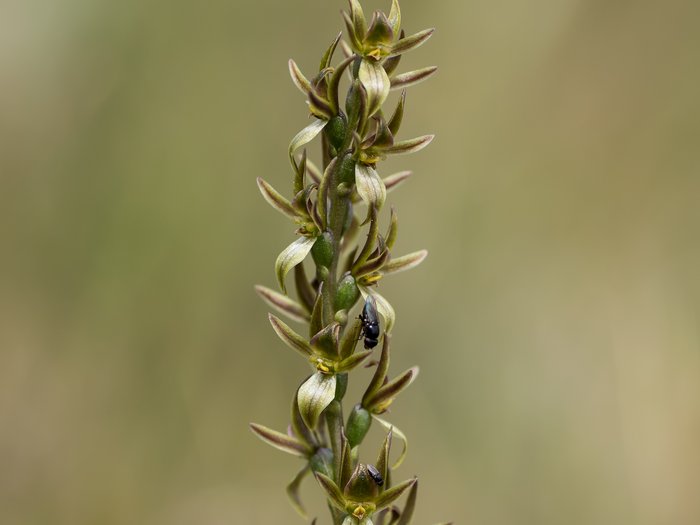
Golfer’s leek-orchid (Paraprasophyllum incorrectum), a critically endangered species.
Photo: Geoff Curry.
Achievements (as of June 2026):
Achievements (as of June 2026):
SNS Achievements:
- 1,215 ha of land with priority natural values under conservation agreements (target for project 600 ha)
- 13 baseline fauna camera surveys
- 9 days of detection dog orchid surveys
- 65 baseline habitat condition surveys
- 13 baseline weed distribution surveys
NHT Achievements:
- 1,547 ha of land with priority natural values under NRM North management agreements
- 11 baseline habitat condition assessments
- 6 sites surveyed for priority weeds
- 25 km of stock fencing
- 80.9 ha of priority weed control
- 5.0 ha of strategic revegetation
- 22 ha of ecological burning
- 45 days of threatened flora propagation
Resources
Resources
Partners
This project is jointly funded by the Australian Government under Saving Native Species and the Natural Heritage Trust, and delivered by NRM North, a member of the Commonwealth Regional Delivery Partners panel.

Partners
This project is jointly funded by the Australian Government under Saving Native Species and the Natural Heritage Trust, and delivered by NRM North, a member of the Commonwealth Regional Delivery Partners panel.