Protecting the ‘hood: habitat conservation and beach-user awareness in north-eastern Tasmania
Building on NRM North’s previous 5-year Hooded Plover Project, this project aimed to work with land managers and community volunteers to address key threats to the breeding success of eastern hooded plover on Tasmania’s north east coast and Flinders Island. Priority conservation activities to reduce identified threats included reducing habitat-altering weeds, human disturbance, and cat predation.
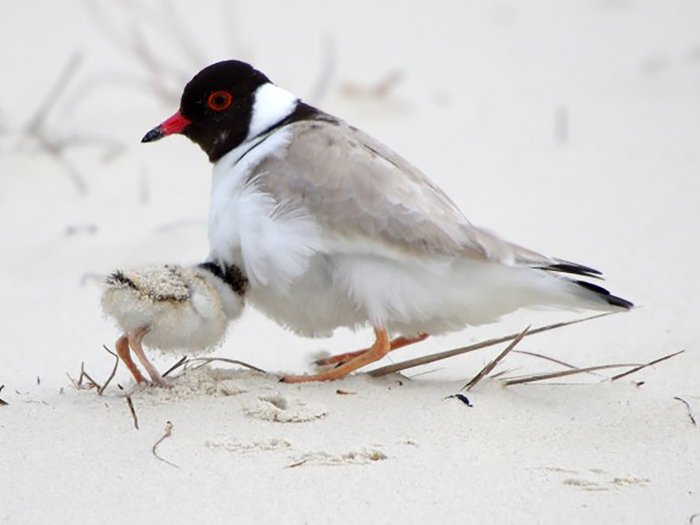
Adult hooded plover with chick. Photo: P. Gray
Background
Background
Tasmania is a stronghold for more than 60 per cent of the remaining eastern hooded plover population. The small, beach-nesting birds are listed as vulnerable under the Environmental Protection and Biodiversity Conservation Act 1999 (EPBC Act), and approximately 25 per cent of the global population of eastern hooded plovers reside on the picturesque coastlines of north eastern Tasmania and the Furneaux Group of islands.
NRM North’s previous 5-year Hooded Plover Project (2019-2023) aimed to safeguard nesting sites by installing temporary protective fencing around nest sites, increasing community awareness about the species and managing coastal weeds in known breeding areas. The project also helped collect data on hooded plover breeding population size and distribution in north east Tasmania to support the planning of future on-ground actions, by contributing to the Birdlife Australia Hooded Plover Biennial Count.
Actions to reduce threats to hooded plover will also provide benefits to other listed shorebird and seabird species with similar ranges such as the little tern, greater sand plover, lesser sand plover and white fronted tern.
Achievements
Achievements
Key project achievements include:
- Over 50 ha of weed control for sea spurge (Euphorbia paralias) completed, with manual weeding along a further 43 km of Tasmania’s north east coast, to improve nesting habitat suitability for hooded plover.
- Strategic control of feral and stray cats implemented across 60 ha of priority habitat to reduce threats to successful breeding.
- 24 days of community education and engagement to reduce beach-use behaviour that threatens nesting success.
- Educational signage installed at 18 beaches across Flinders Island and the east coast of Tasmania.
- Installation of barriers at 11 key sites to prevent illegal vehicle access to beaches.
- Shorebird count covered over 200 km of coastline, recording 314 hooded plovers.
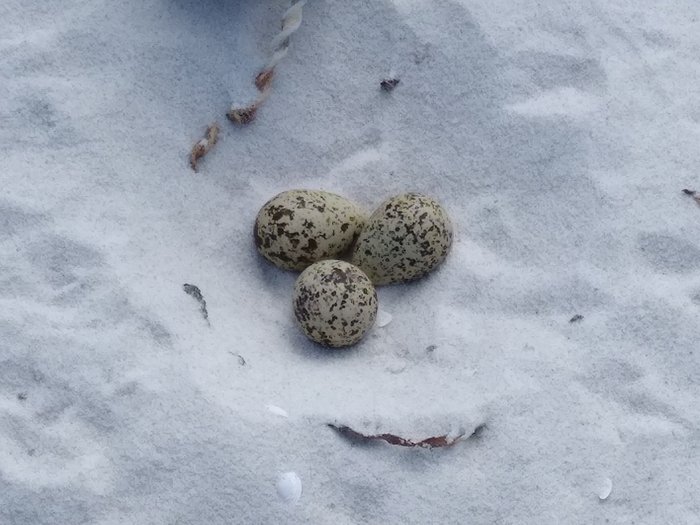
Hooded plover eggs in a nest - a small scrape in the sand.
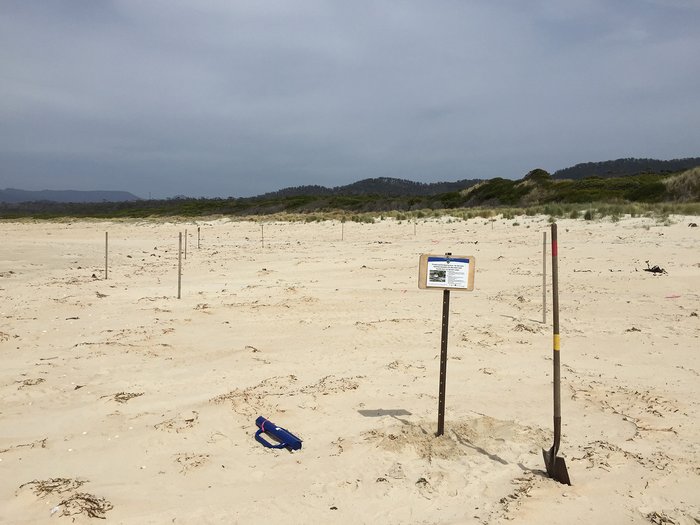
Temporary fencing is installed on beaches to protect nests during breeding season.
A collaborative approach
A collaborative approach
This project further developed existing partnerships between government agencies and local community groups who worked together to achieve the Project’s shared desired outcomes. NRM North closely partnered with Tasmania Parks and Wildlife Service, who is land manager for many project areas, as well as a key delivery partner for on-ground activities, including education through the Discovery Ranger program.
To further support the project actions, Tasmania Parks and Wildlife Service complimented funded on-ground actions by increasing their presence on local beaches during key breeding periods to address non-compliant beach use behaviour.
The project also collaborated with the North-east Bioregional Network, Birdlife Australia and Wildcare Friends of the Larapuna Coast.
“We surveyed over 200 km of coastline and recorded 314 hooded plovers, as well as other shorebirds including oyster catchers and fairy terns … by developing strong partnerships, and combining on-ground action, community engagement, and long-term monitoring, we’re giving hooded plovers a much better chance of breeding success on our Tasmanian beaches."
“We surveyed over 200 km of coastline and recorded 314 hooded plovers, as well as other shorebirds including oyster catchers and fairy terns … by developing strong partnerships, and combining on-ground action, community engagement, and long-term monitoring, we’re giving hooded plovers a much better chance of breeding success on our Tasmanian beaches."
Nikita Sarangdhar
Nikita Sarangdhar
Get involved
There are plenty of ways that you can help to protect hooded plover populations in Tasmania. Remember to walk, run and relax on the harder sand below the high-tide mark, keep dogs on-lead to prevent them from disturbing nests, and keep vehicles off the beach.
Partners
This project is funded by the Australian Government's Saving Native Species Program and delivered by NRM North.


Partners
This project is funded by the Australian Government under Saving Native Species and delivered by NRM North as member of the Commonwealth Regional Delivery Partners panel.